
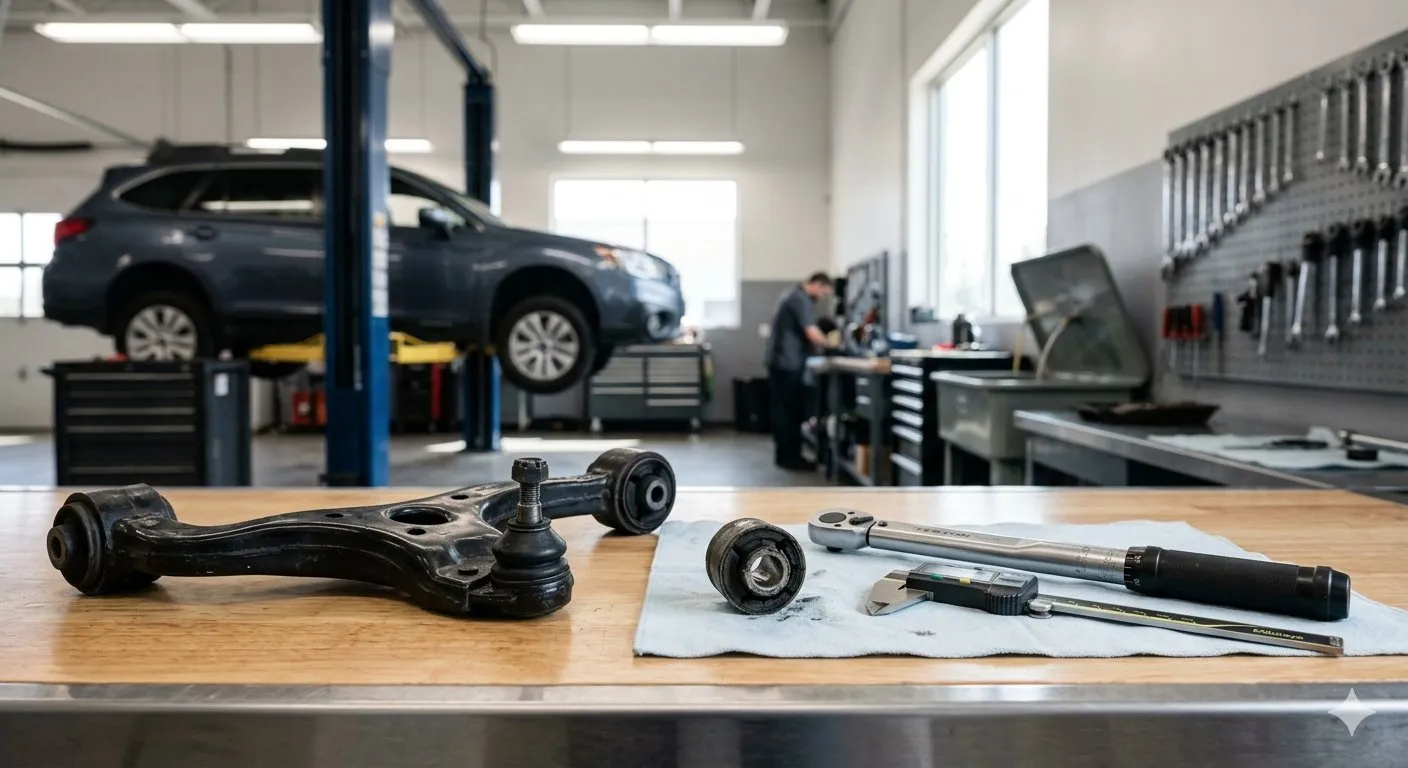
A small failure can force an unexpectedly large decision. Should the worn bearing be replaced alone, or should the complete hub assembly be installed? Similar choices arise with suspension, cooling, and electrical systems. Buying replacement parts for your vehicle responsibly means considering labor, component condition, service instructions, and the cause of failure. The lowest individual-item cost is not always the least expensive repair, but a complete assembly is not automatically necessary either. Understanding the tradeoff can prevent waste and repeated labor.
Identify What Actually Failed
Begin with reliable diagnosis rather than replacing the largest nearby assembly. A noise, leak, or vibration can originate from several neighboring parts. Ask which observations and tests support the conclusion. If disassembly is required, inspect adjacent components before committing to a specific repair scope. Some assemblies are not intended to be serviced at the subcomponent level. Manufacturer guidance and practical access can determine whether the smaller repair is even an appropriate option. Repair versus replacement depends on serviceability, failure cause, and manufacturer guidance.
Compare Labor, Not Just Parts
Replacing a small internal component may involve considerable time, special presses, or complex disassembly. A complete assembly can sometimes reduce labor and uncertainty, though it may cost more upfront. Compare total estimates including new hardware, fluids, alignment, and related service procedures. The cheaper part can be the more expensive choice once installation is included. Ask for a clear explanation of why one route suits the vehicle and the condition of its existing components. Comparing labor alongside components reveals the true value of each option.
Check What Comes in the Box
Assembly names can obscure important differences in package contents. One listing may include seals, sensors, and hardware; another may supply only the core mechanical item. Review technical details and installation notes carefully. Confirm that parts are compatible with the exact vehicle configuration. A kit that includes everything required can simplify preparation, while a partially supplied assembly may cause delays. Avoid making assumptions based on photographs or a broad product title. Review exactly what a replacement assembly includes before ordering. This practical approach.
Consider Wear Across the System
Components in the same assembly often experience similar mileage, heat, contamination, and vibration. If several are worn, replacing only one may leave another failure close behind. On the other hand, perfectly serviceable pieces should not be discarded without reason. Inspection findings should drive the decision. For example, damage caused by a leak or poor lubrication may require correcting the underlying cause before installing any replacement, regardless of its scope. Inspecting connected wear can reveal the cause of repeated failures. This practical approach.
Review Serviceability and Tools
Some components require special tools, precise clearances, or electronic procedures that ordinary home workshops cannot perform safely. A replacement assembly may not eliminate all such requirements. Verify the service method in vehicle-specific instructions and seek qualified assistance when needed. Incorrect pressing, torque, or alignment can shorten component life or create safety hazards. Choosing a repair route without checking the required procedure can make an apparently simple job difficult or dangerous. Required tools and expertise can change which repair approach is practical.
Use the Vehicle’s Future Plans
An owner preparing to keep a vehicle for many years may assess risk differently from someone considering replacement soon. However, safety-critical repairs must remain safe regardless of ownership plans. Consider mileage, overall condition, recurring faults, and budget without allowing short-term savings to justify a questionable repair. Request an itemized estimate for each reasonable option. A transparent comparison helps separate necessary work from speculative upgrades. A written service record gives the next technician valuable context rather than an incomplete story about earlier work.
Verify the Completed Work
Whether one component or an entire assembly is replaced, the repair should restore the system’s intended function. Check for leaks, warning messages, noise, alignment issues, or abnormal operation according to service guidance. Preserve invoices and part details. If the original symptom returns, reconsider the diagnosis rather than assuming the new component must be defective. Good verification prevents the repair from becoming an endless sequence of unrelated purchases. Functional testing after installation confirms whether the system operates correctly. These details support reliable future maintenance and troubleshooting.
Conclusion
The right repair scope depends on confirmed failure, surrounding wear, serviceability, labor, and long-term vehicle condition. A complete assembly may reduce work in some situations, while a focused component replacement may avoid unnecessary expense in others. TeamVehicle can be consulted when comparing suitable parts and kit contents. The strongest decision is one supported by inspection and a total-cost estimate, followed by a proper installation and a check that the original fault has been resolved. A complete estimate includes labor, supporting parts, and expected service life.
