
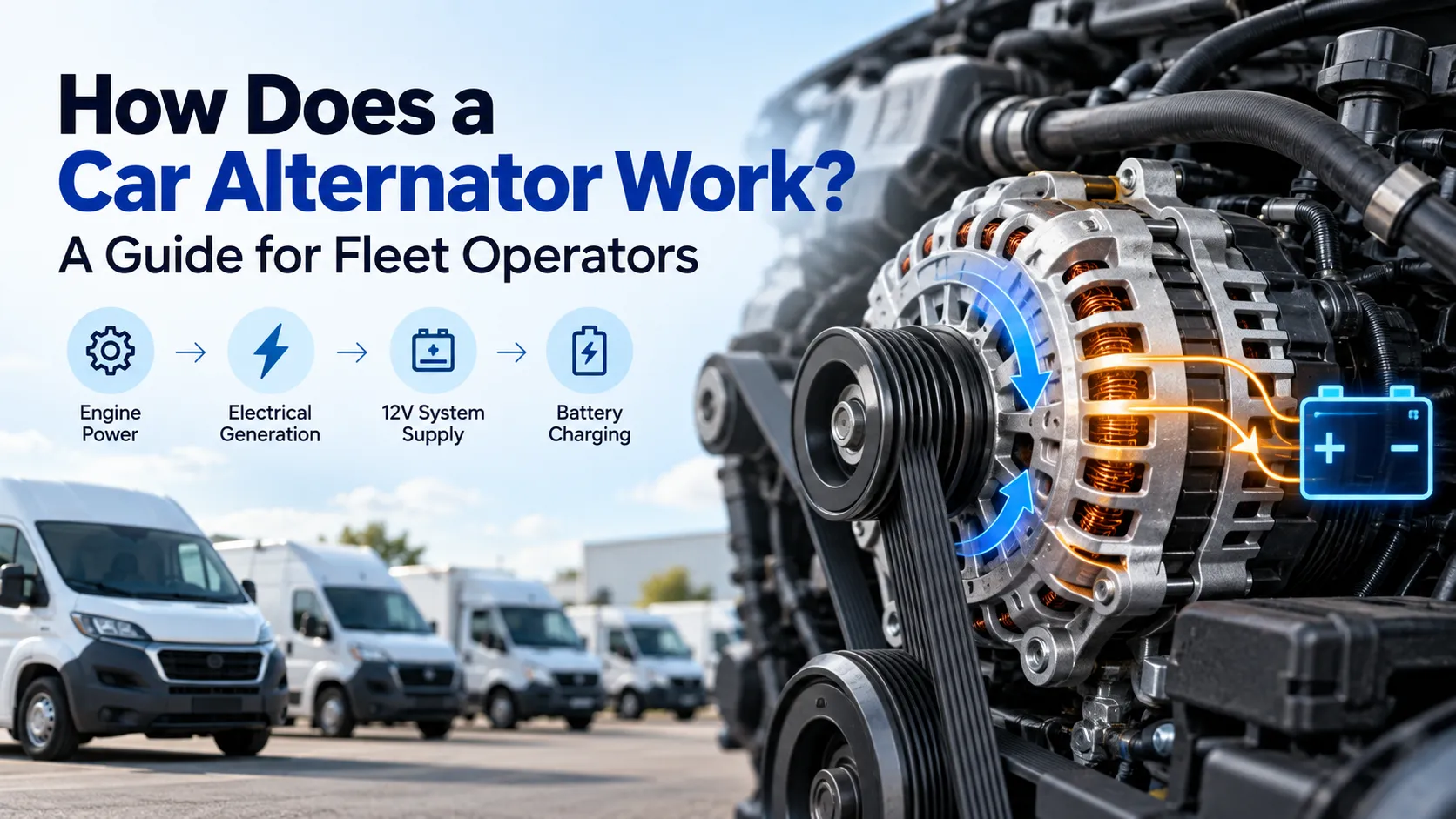
If you have ever wondered how does a car alternator work, the basic principle is straightforward: the alternator converts mechanical energy from the running engine into electrical energy that powers the vehicle’s electrical systems and replenishes the starter battery.
In a conventional petrol or diesel vehicle, the alternator is a central part of the vehicle charging system. It supports everything from lighting and engine electronics to climate controls, infotainment and other electrical equipment. For fleet operators, understanding this process is particularly useful because electrical demand can vary significantly between vehicles, routes and operating conditions.
The alternator does not simply “make electricity for the battery.” It continuously responds to the vehicle’s electrical demand while the engine is running, making its operating load an important part of the vehicle’s overall energy system.
What Does a Car Alternator Do?
The alternator is essentially an engine-driven electrical generator. It is connected mechanically to the engine through a belt and converts rotational movement into electrical power.
When the engine runs, the alternator’s rotor spins inside a stationary stator. This electromagnetic process produces alternating current (AC), which is then converted into direct current (DC) by the alternator’s rectifier. The resulting electrical power can supply the vehicle’s 12V electrical network and help maintain the starter battery’s state of charge.
Modern vehicles contain numerous electrical loads. Depending on the vehicle, these can include headlights, wipers, blowers, electronic control units, fuel systems, communication equipment and aftermarket accessories.
For vehicles with substantial electrical requirements, understanding the underlying 12V vehicle electrical system provides useful context for understanding alternator operation.
How Car Alternators Work
The easiest way to understand how car alternators work is to follow the energy path.
The engine produces mechanical energy. A belt transfers some of that rotational energy to the alternator. Inside the alternator, the rotating magnetic field induces electrical current in the stator windings.
The generated AC electricity passes through a rectifier, which converts it into DC electricity suitable for the vehicle’s electrical architecture. A voltage regulator manages the alternator’s output so that the electrical system receives an appropriate voltage under changing operating conditions.
The alternator therefore performs two related jobs:
-
It supplies electrical power while the engine is running.
-
It helps recharge the starter battery after electrical energy has been consumed.
This distinction matters for fleet operators because an alternator represents an additional mechanical load on the engine. Producing electrical power requires energy, and that energy ultimately comes from fuel consumed by the engine.
Why Alternator Load Matters
Alternator output is not constant in every driving situation. Electrical demand changes depending on what equipment is operating and what the vehicle’s electrical management system requires.
A vehicle travelling during the day with minimal electrical accessories may require relatively little electrical power compared with the same vehicle operating at night with lights, ventilation, communications equipment and additional accessories active.
This makes alternator load relevant to vehicle energy management. The alternator must generate enough electricity to meet the electrical demand while also maintaining the starter battery.
What Does This Mean for Fleet Vehicle Electrical Systems?
For a single private vehicle, electrical demand may seem relatively small. Fleet operations can present a different challenge because vehicles may operate for long periods and may repeatedly encounter similar electrical loads.
Urban delivery vehicles, service vehicles and commercial fleets can spend significant time operating auxiliary electrical equipment. Depending on the vehicle and application, these loads can include refrigeration equipment, communication systems, additional lighting, monitoring equipment and other installed accessories.
Fleet engineers therefore need to consider the complete electrical architecture rather than looking at the alternator in isolation.
A useful starting point is to identify the vehicle’s normal electrical loads, when those loads occur and whether the engine is running specifically to provide electrical power. This can help distinguish between electrical requirements that are essential for vehicle operation and those associated with auxiliary equipment.
The relationship between the alternator, starter battery and electrical loads is also relevant when evaluating automotive power management concepts.
Can an Auxiliary Battery Reduce Dependence on the Alternator?
One approach being explored in automotive engineering is separating certain electrical energy requirements from continuous engine-driven generation.
An auxiliary battery can store electrical energy and provide power to selected loads without requiring the alternator to generate that electricity at the same moment. The exact feasibility depends on the vehicle architecture, battery characteristics, charging method, electrical loads and control strategy.
Nulldraw is developing a concept based on a grid-charged auxiliary battery intended to supply a conventional petrol or diesel car’s 12V electrical system. The proposed design is intended to use mains electricity to charge the auxiliary pack rather than relying on the engine-driven alternator for that stored energy.
The engine, alternator and starter battery remain part of the conventional vehicle. Nulldraw is a technology in development, so its proposed architecture should be understood as a design concept rather than a commercially available system or established production solution.
Practical Considerations for Fleet Operators
Before considering any change to a vehicle’s electrical architecture, fleet operators should understand the actual electrical profile of the vehicles involved.
Key considerations include:
-
The continuous and intermittent electrical loads.
-
When those loads occur during a typical duty cycle.
-
Alternator capacity and operating conditions.
-
Starter battery requirements.
-
Auxiliary battery capacity and charging requirements.
-
Electrical protection and control systems.
-
Compatibility with the vehicle’s existing electrical architecture.
This assessment is especially relevant when vehicles spend considerable time performing stationary or low-speed duties. In such applications, understanding where electrical energy comes from—and when the engine is required to provide it—can help engineers evaluate alternative system architectures.
Future Considerations for Vehicle Energy Systems
The conventional 12V electrical system remains an important part of many petrol and diesel vehicles. As electrical equipment continues to become more integrated into vehicles, managing electrical demand alongside mechanical energy becomes increasingly relevant to automotive engineering.
Future vehicle energy-system designs may therefore consider not only how much electrical energy a vehicle requires, but also when and how that energy is generated, stored and delivered.
For fleet operators, the most useful question is not simply whether an alternator can provide sufficient electrical power. It is whether the overall vehicle energy architecture is appropriate for the vehicle’s actual operating cycle.
Conclusion
Understanding how does a car alternator work starts with a simple energy conversion: the engine provides mechanical rotation, the alternator converts that rotation into electrical energy, and the vehicle’s charging system distributes and regulates that energy for the 12V electrical network and starter battery.
For fleet operators, however, the wider issue is alternator load and how electrical demand fits into the vehicle’s operating cycle. High or continuous electrical loads can make the relationship between the engine, alternator, battery and auxiliary equipment particularly important.
Concepts such as Nulldraw’s proposed grid-charged auxiliary battery explore another way of approaching this relationship. Because the system remains in development, its practical capabilities and suitability require engineering evaluation rather than assumptions. For fleet engineering, understanding the underlying energy architecture is the essential first step.
